Access Control
 Software
 eHajira - HR & Payroll Software
 Smart Lock / Hotel
 Face Reader (TA & AC)
 ZKTeco
 Hundure
 Virdi
 Slave Reader
 Anviz
 Fingerprint Scanner
 Access Control Accessories
 Access Control Power Supply
 Electromagnetic Door Lock (EM Lock)
 Push Button
 CCTV & IP Camera
 Wireless IP Camera
 Dahua Wireless IP Camera
 Hikvision Wireless IP Camera
 IMOU Wireless IP Camera
 Ezviz Wireless IP Camera
 Jovision Wireless IP Camera
 KERUI Wireless IP Camera
 ZKTeco Wireless IP Camera
 CCTV Camera
 Dahua CCTV Camera
 Hikvision CCTV Camera
 Avtech
 CCTV Camera Package
 Campro
 IP Camera
 Avtech IP Camera
 Hikvision IP Camera
 Dahua IP Camera
 TP-Link IP Camera
 Jovision IP Camera
 UNIVIEW IP Camera
 DVR
 Jovision DVR
 Avtech DVR
 Dahua DVR
 Hikvision DVR
 XVR
 Dahua XVR
 Jovision XVR
 Uniview XVR
 NVR
 Avtech NVR
 Dahua NVR
 Hikvision NVR
 Jovision NVR
 Uniview NVR
 PA System
 Conference System
 Wireless Conference System
 Ahuja Conference System
 Verbex Conference System
 ITC Conference System
 Bosch Conference System
 HTDZ Conference System
 TOA Conference System
 Portable Speaker
 Verbex Portable Speaker
 Ahuja Portable Speaker
 JBL Portable Speaker
 Havit Portable Speaker
 TOA Portable Speaker
 Megaphone
 Show Megaphone
 TOA Megaphone
 Ahuja Megaphone
 Verbex Megaphone
 Amplifier
 Ahuja Amplifier
 TOA Amplifier
 JBL Amplifier
 C-Yark Amplifier
 Verbex Amplifier
 DSPPA Amplifier
 ITC Amplifier
 Soundstandard Amplifier
 Ayzo Amplifier
 Beta3 Amplifier
 Peavey Amplifier
 Delta Amplifier
 Bosch Amplifier
 PA Speaker
 Garden Speaker
 Long Range Slim Array Speaker
 Column Speaker
 Wall Speaker
 Ceiling Speaker
 Horn Speaker
 Professional Loudspeaker
 Box Speaker
 Microphone
 MPro Microphone
 Verbex Microphone
 Bosch Microphone
 TOA Microphone
 Ahuja Microphone
 Clarion Microphone
 Wireless Microphone
 Bosch Wireless Microphone
 Studiomaster Wireless Microphone
 CMX Wireless Microphone
 Verbex Wireless Microphone
 Ahuja Wireless Microphone
 TOA Wireless Microphone
 HTDZ Wireless Microphone
 JBL Wireless Microphone
 MPro Wireless Microphone
 Driver Unit and Trumpet Horn
 TOA Driver Unit
 Ahuja Driver Unit
 Bosch Driver Unit
 Verbex Driver Unit
 Pa system Accessories
 Mixer & Zone Selector
 Bosch Mixer & Zone Selector
 HTDZ Mixer & Zone Selector
 Verbex Mixer & Zone Selector
 Ahuja Mixer & Zone Selector
 TOA Mixer & Zone Selector
 HTDZ Mixer
 Soundcraft Mixers
 DBX Zone & Audio Processor
 Yamaha Mixer
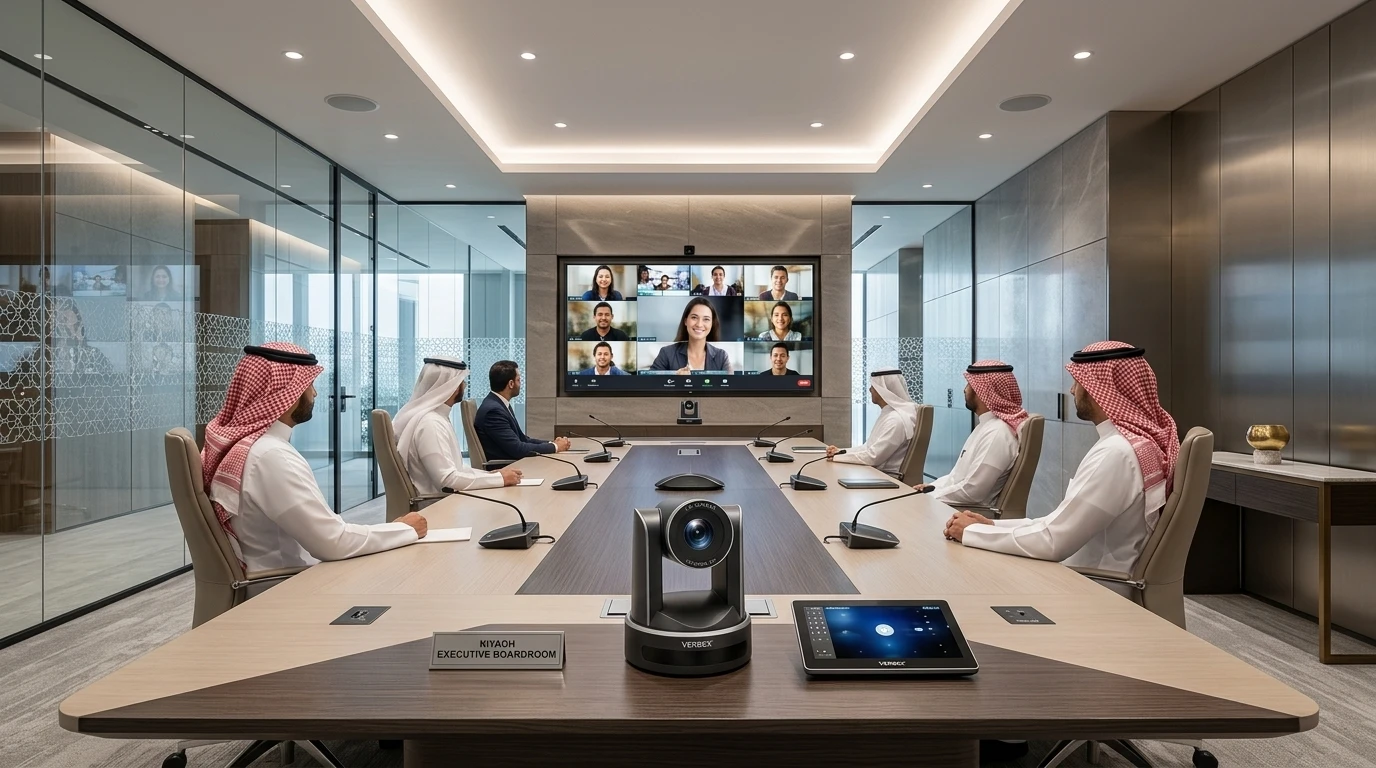
 Video Conference System
 AVer Video Conference
 logitech Video Conference
 IP PA System
 Dinstar IP PA System
 Verbex IP PA System
 C-YARK IP PA System
 PABX
 IP PBX
 Zycoo IP PBX
 Synway IP PBX
 Dinstar IP PBX
 OpenVox IP PBX
 Grandstream IP PBX
 IP Phone
 Panasonic IP Phone
 GrandStream IP Phone & PBX
 Flyingvoice IP Phone
 Fanvil IP Phone
 Yealink
 Synway IP PBX
 Dinstar IP Phone
 Snom iP Phone
 Zycoo IP PBX
 Yeastar IP PABX Machine
 Verbex Intercom and PABX
 IKE PABX & Intercom
 Telephone Set & Master Set
 Hellotel Telephone Set
 Panasonic telephone set
 Panasonic PABX & Intercom
 PABX & Intercom Accessories
 EAS Security
 EAS Gate
 Soft Tag
 Hard Tag
 Tag Removers and Detachers
 Tag Deactivator & Detector
 Alarm & Calling System
 Burglar Alarm
 Intruder Alarm System
 Glass Break Detector
 Door Sensor / Window Sensor
 Water Leakage Alarm Sensor
 GSM Alarm
 Carbon Monoxide & Gas Leak Detector Sensor
 Motion Sensor
 Smoke Detector
 Siren for Alarm System
 Home Security System
 Calling System
 Restaurant Calling System
 Window Intercom
 Kitchen call waiter system
 Queue call system
 Hospital call system
 Guest coaster pager system
 Wireless Tour-guide System
 Security
 Full Height Turnstile
 Swing Barrier
 Hand Held Metal Detector
 Tripod Turnstile
 ZKTeco Tripod Turnstile
 Dahua Tripod Turnstile
 Hikvision Tripod Turnstile
 Verbex Tripod Turnstile
 Archway Gate
 ZKTeco Archway Gate
 Hikvision Archway Gate
 Dahua Archway Gate
 Uniqscan Archway Gate
 Verbex Archway Gate
 MCD Archway Gate
 Garrett Archway Gate
 Under Vehicle Search Mirror
 Parking Barrier
 Dahua Parking Barrier
 ZKTeco Parking Barrier
 Hikvision Parking Barrier
 Verbex Parking Barrier
 Convex Mirror
 Flap Barrier Gate
 ZKTeco Flap Barrier Gate
 Hikvision Flap Barrier Gate
 Dahua Flap Barrier Gate
 Verbex Flap Barrier Gate
 Body Camera
 Barrier
 Queue Stand
 Loading Dock Bumpers
 PVC Tactile Paving
 Wheel Chock
 Reflective Guardrail Delineator
 Crash Resistance Lane Separator
 Rubber Column Guard
 Rubber Wheel Stopper
 Cable Protector
 Traffic Warning Light
 Traffic Cone Connect
 Tyre Killer Spikes
 Safety Sign
 Rubber Speed Breaker
 Safety Barricade Tape
 Crowd Control Stanchion
 Plastic Water Filled Barrier
 Warning Post
 Curb Ramp
 Traffic Cone
 LED Warning Traffic Baton
 Traffic Road Stud
 Baggage Scanner
 Networking
 Patch Panel
 Face Plate
 Access Point
 POE Switch
 Cable Manager
 Patch Cord
 RJ45 Connector
 Network Cable CAT6
 Dahua CAT6 Cable
 Mikrotik
 Router
 TP-Link Router
 Tenda Router
 Cudy Router
 Ruijie Router
 Netis Router
 Crimping Tools
 Server Rack
 Raised Floor
 Display & Signage
 Advertising Display
 Interactive Flat Panel (IFP)
 Accessories
 Office Equipment
 Barcode Scanner
 Cash Drawer
 HDMI Cable
 Web Design & Development
 Corporate Website
 Company Profile Website
 Agency Website
 Startup Website
 Portfolio Website
 Personal Website
 Landing Page
 Product/Service Showcase Website
 E-commerce
 Online Shop
 Multi-vendor Marketplace
 B2B E-commerce
 B2C E-commerce
 Subscription-based Store
 Booking & Order Website
 Industry-specific Website
 Restaurant Website
 Hotel/Resort Website
 Real Estate Website
 Hospital/Clinic Website
 School/College/University Website
 Travel & Tourism Website
 Law Firm Website
 Construction Company Website
 NGO Website
 News/Media Website
 Event Website
 Business Software
 ERP Software
 CRM Software
 HR & Payroll Software
 Accounting Software
 Inventory Management
 POS Software
 Project Management
 Task Management
 Employee Management
 Customer Management
 Industry Software
 School Management System
 Hospital Management System
 Restaurant Management System
 Pharmacy Management
 Real Estate Management
 Library Management
 Transport/Fleet Management
 Gym Management
 Appointment Management
 Online Platforms
 Learning Management System (LMS)
 Course Platform
 Job Portal
 Marketplace
 Freelancing Platform
 Booking Platform
 Membership Platform
 Community/Social Platform
 Classified Ads Website
 Advanced Web Development
 Custom Web Application
 SaaS Application
 API Development
 Third-party API Integration
 Payment Gateway Integration
 SMS/Email/WhatsApp Integration
 AI-powered Web Application
 Automation System
 Real-time Chat System
 Notification System
 CMS
 WordPress
 Shopify
 Webflow
 Wix
 WooCommerce
 Maintenance & Growth Services
 Bug Fixing
 Security Updates
 Speed Optimization
 Website Backup
 Server/Hosting Management
 Domain & SSL Setup
 SEO Technical Optimization
 Website Migration
 Performance Monitoring
 Content Update
 Website Maintenance
 Marketing
 Digital Marketing
Connect Your Brand, Customers, and Employees Through Technology: A Business Guide for Saudi Arabia and Makkah
October 27, 2026

Connect Your Brand, Customers, and Employees Through Technology: A Business Guide for Saudi Arabia and Makkah
A strong brand makes a promise. Customers judge that promise through their experience, and employees deliver it through their everyday work. Technology can connect these three elements, helping businesses communicate clearly, respond consistently, and operate with greater accountability.
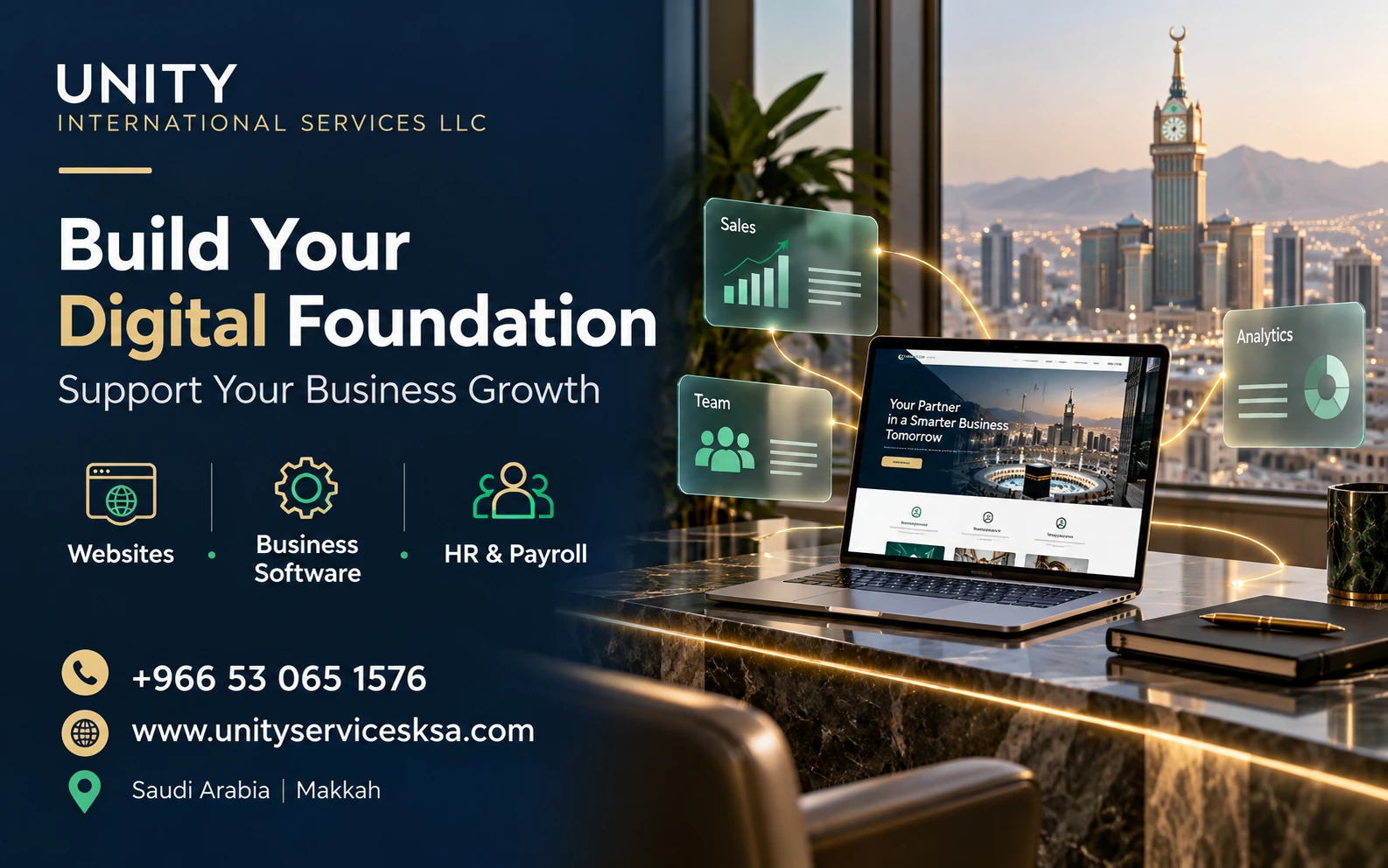
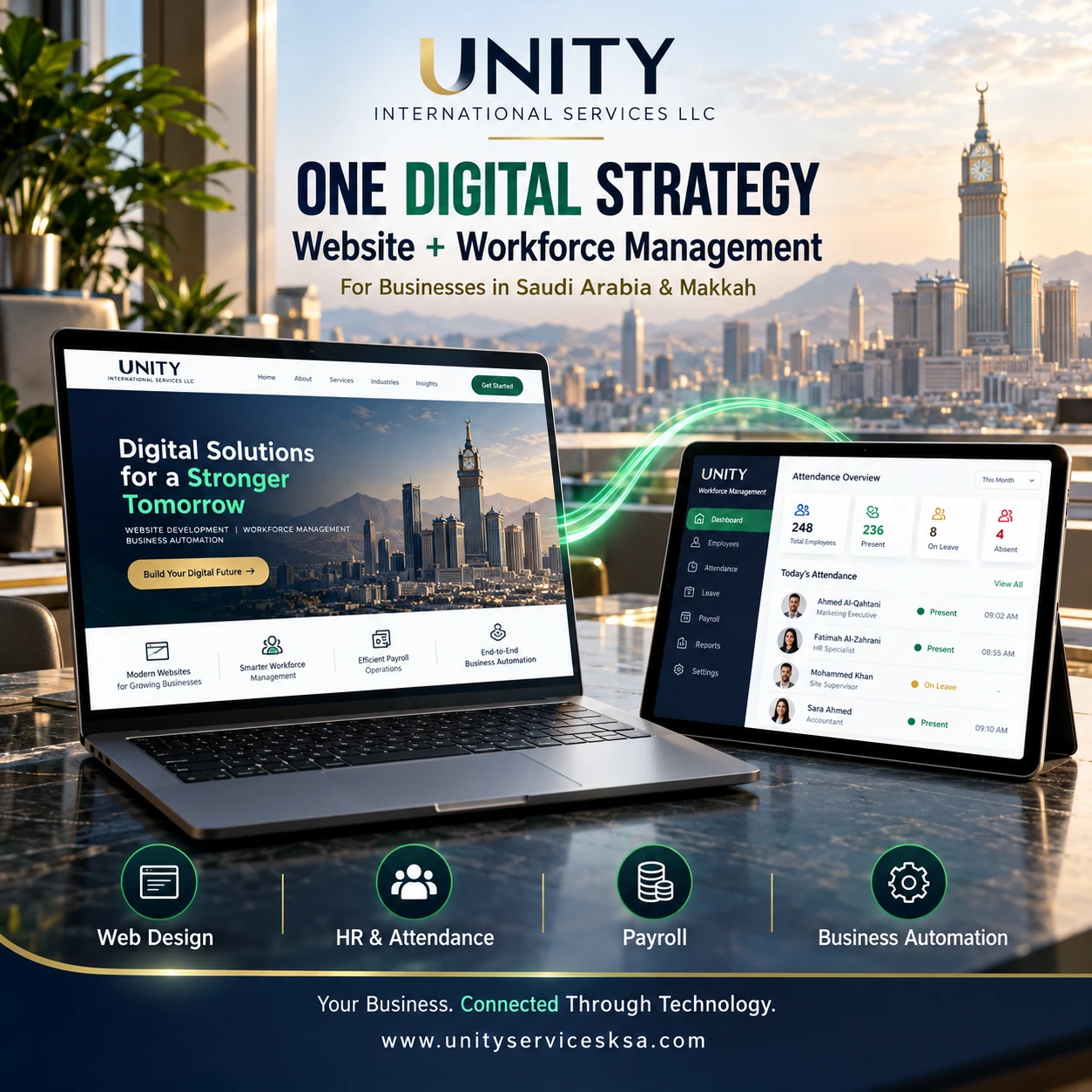
For companies in Saudi Arabia and Makkah, this means building a digital strategy that connects the public website, customer enquiries, sales activities, employee workflows, and management reporting.
A professional website may attract interest, but sustainable growth also requires reliable follow-up and service delivery. Likewise, effective employees need accurate information, clear responsibilities, and practical tools.
This guide explains how businesses can establish those connections, drawing on official Saudi market research and using illustrative applications for Makkah’s hospitality, retail, contracting, and technology sectors.
1. Why Connected Technology Matters in Saudi Arabia
Saudi Arabia offers a highly connected environment for digital business. The Communications, Space and Technology Commission’s Saudi Internet 2025 report records an internet penetration rate of 99.6%. This establishes the scale of connectivity, although it does not independently measure demand for a particular company’s services.
For business leaders, the implication is that digital channels deserve operational attention. A customer can discover a company online, compare its services, submit an enquiry, and form an opinion before speaking to an employee.
When those interactions connect with organized internal processes, businesses can create a more consistent experience.
The objective should be measurable improvement: better-qualified enquiries, clearer communication, fewer missed handovers, and more dependable service.
2. Understand the Connection Between Brand, Customers, and Employees
Your brand includes the expectations associated with your company. Your customers experience those expectations through communication, purchasing, delivery, and support. Your employees influence every stage.
Consider a company advertising responsive technical support. Its website creates the expectation, its customer service team receives the request, and its technicians deliver the response.
If those teams use disconnected records, the customer may repeat information or receive conflicting updates.
A connected process gives the enquiry an owner, records the agreed scope, and communicates the next action.
This alignment turns brand positioning into an operational standard that employees can understand and customers can experience.
3. Recognize Makkah’s Distinct Business Environment
Makkah businesses serve residents, commercial organizations, and visitors with different expectations and communication needs.
Official GASTAT statistics recorded 5,443,393 internal and external Umrah performers in the second quarter of 2025. This provides context for the scale of visitor-related activity; it should not be interpreted as the customer base available to an individual business.
Hotels, restaurants, suppliers, maintenance companies, and contractors may need to coordinate changing workloads and multilingual enquiries.
The practical planning response is to connect customer demand with staffing and delivery capacity.
Businesses should use their own booking patterns, service history, and sales records to establish priorities. A connected system makes those internal signals easier to review.
4. Start With the Customer Journey
Before purchasing software, map how customers move through your business.
A typical journey includes discovery, enquiry, qualification, quotation, approval, delivery, support, and renewal.
At each stage, identify the responsible employee, required information, and expected next action.
For example, a Makkah technology supplier may receive a website enquiry for attendance devices. Sales needs employee numbers and site details. Technical staff need compatibility information. Accounts needs approved commercial terms.
Documenting these handovers reveals where information is lost or work is duplicated.
Technology investment can then target an identifiable problem rather than simply adding another application to the business.
5. Make Your Website a Reliable Brand Platform
Your website should present a clear and accurate picture of the company.
Explain your services, intended customers, genuine service coverage, and delivery process. Include authentic project examples where permission allows.
For Saudi audiences, Arabic and English content may help serve different customer groups. The appropriate language mix should follow actual audience needs.
Each service page should answer practical questions: What does the service include? What information is needed? How does implementation work? What happens after the enquiry?
Consistent language, professional email addresses, and accurate contact information strengthen the customer experience.
The website should also make it easy for employees to direct customers toward dependable information.
6. Connect Website Enquiries With Customer Management
A customer relationship management system, or CRM, provides a structured place to manage leads and business conversations.
A website enquiry can create a lead record containing the requested service, company details, submission date, and assigned owner.
Employees can then record calls, prepare quotations, schedule follow-ups, and update the opportunity stage.
The commercial value comes from process discipline. A CRM with incomplete records will still leave management uncertain.
Define a small set of required fields and clear ownership rules. Review overdue follow-ups and unassigned enquiries regularly.
This creates a practical connection between marketing activity and the sales pipeline.
7. Create Consistent Communication Across Channels
Customers may contact a company through its website, telephone, email, social media, or messaging channels.
Where appropriate integrations are available, these conversations can connect with a shared customer record. Where they are unavailable, employees still need a consistent recording process.
The goal is to maintain enough context for the next employee to help effectively.
For example, a customer who approved a quotation should not receive a generic follow-up asking whether they are interested.
Use templates for common situations, including enquiry acknowledgements, quotation reminders, appointment confirmations, and support updates.
Allow employees to adapt templates to the customer’s actual circumstances.
8. Give Employees Clear Digital Workflows
Customer experience depends partly on how easily employees can complete their work.
Task management tools can clarify responsibilities, deadlines, supporting documents, and approval requirements.
For a maintenance company, a service request might become a work order with a site address, customer contact, assigned technician, and completion record.
For a supplier, an approved order might create separate purchasing, delivery, and installation tasks.
Avoid unnecessary complexity. Employees should be able to identify their next action without searching across multiple systems.
Clear workflows also help managers distinguish between a delayed task, missing information, and a genuine capacity constraint.
9. Integrate HR, Attendance, and Scheduling Thoughtfully
Workforce systems can help organize employee profiles, attendance, leave, schedules, and payroll preparation.
Their connection with customer operations should focus on relevant information. A service coordinator may need technician availability, while payroll details should remain restricted.
For a Makkah service company, approved leave and shift schedules can inform appointment capacity. This can reduce the risk of accepting work without sufficient staff.
Attendance records still require review and exception handling. Missing device data or an approved off-site assignment should not automatically become a final payroll decision.
Configure workflows around documented company policies and applicable employment requirements.
10. Plan Saudi Payroll Requirements Separately
A system that calculates salaries does not automatically satisfy every Saudi payroll obligation.
The Ministry of Human Resources and Social Development states that wage protection files are uploaded through the Compliance System in Mudad. This should be considered when assessing payroll workflows and software suitability.
Businesses should verify required outputs, responsibility for submission, bank processes, and exception handling.
Ask vendors to demonstrate the specific functionality included in the proposed package.
For any HR or attendance solution, including eHajira, evaluate Saudi-specific requirements against the actual implementation scope. Avoid assuming that general payroll functionality establishes a government integration or compliance certification.
11. Apply Connected Technology to Makkah Industries
Different sectors require different priorities.
| Sector | Customer need | Employee workflow | Useful digital connection |
|---|---|---|---|
| Hospitality supplier | Clear products and quotations | Sales and delivery coordination | Website enquiry to CRM |
| Maintenance company | Reliable appointments | Technician assignment | Service request to work order |
| Retail business | Accurate order information | Stock and fulfillment tasks | Storefront to order management |
| Contractor | Project capability and progress | Approvals and site coordination | Client enquiry to project records |
| Software provider | Demonstrations and support | Implementation and ticket handling | CRM to onboarding and help desk |
These are illustrative applications rather than measured case studies.
Each business should select connections that address its own operational constraints and customer expectations.
12. Make Multilingual Service Practical
Arabic and English communication can support a broad range of business interactions in Saudi Arabia.
Additional languages may be useful for particular customer or employee groups, but every language version requires maintenance.
Prioritize accuracy in service conditions, appointment details, support instructions, and safety-related information.
For employees, clear onboarding materials and role-specific instructions can reduce uncertainty. For customers, consistent terminology helps avoid misunderstandings between sales and delivery.
Assign content ownership so that policy changes reach every relevant channel.
Multilingual technology works best when translation, interface design, and staff training receive attention together.
13. Use Automation for Defined Tasks
Automation can help with repetitive actions such as assigning leads, acknowledging enquiries, reminding employees about pending approvals, or notifying customers of status changes.
Start with workflows that have clear triggers and predictable outcomes.
For example, a submitted quotation request can notify the assigned salesperson and create a follow-up task. A manager should still review pricing or unusual commercial terms.
Monitor failed actions and provide a manual recovery process.
Automation should make responsibilities more visible. If no employee owns the result, an automated workflow can leave customers waiting just as easily as a manual one.
14. Protect Customer and Employee Information
Connecting systems increases the importance of deciding who can access information and why.
Saudi Arabia’s Personal Data Protection Law protects personal data and defines obligations for controllers. SDAIA also publishes guidance to help organizations understand their responsibilities.
Review the information collected, its purpose, access permissions, retention arrangements, and vendor responsibilities.
A salesperson may need customer contact history without needing employee salary records. A technician may need a site contact without needing the full commercial account.
Apply appropriate access controls, strong authentication, backups, and documented recovery procedures.
Privacy planning should reflect the actual systems and data flows used by the business.
15. Evaluate Cloud Services and Integrations Carefully
Cloud platforms can support access across offices, branches, and field teams. Their suitability depends on the service, security arrangements, contracts, and data requirements.
Hosting outside Saudi Arabia does not, by itself, remove Saudi privacy considerations. SDAIA’s guidance includes an example showing PDPL relevance to customer data stored through an overseas cloud provider.
Evaluate data transfers and applicable obligations before implementation.
For integrations, define which system owns each record, how changes synchronize, and what happens when a connection fails.
Shared customer or employee identifiers can help prevent duplicate records, while audit logs support investigation when information differs.
16. Measure Business Outcomes
Management reporting should connect technology activity with operational results.
Useful indicators include:
Qualified enquiries by source.
Lead response time.
Quotation conversion rate.
Service completion time.
Unresolved customer requests.
Payroll exceptions requiring correction.
Establish a baseline before claiming improvement.
If response time falls after a new workflow launches, use comparable periods and consistent definitions. Consider changes in staffing or enquiry volume before attributing the result entirely to software.
Employee feedback also matters. A dashboard may appear successful while staff still maintain duplicate spreadsheets to complete essential work.
17. Implement Through a Phased Roadmap
A phased implementation helps control scope and support adoption.
Begin with discovery: document the customer journey, existing systems, data quality, and business priorities.
Next, establish the foundation: update key website pages, organize enquiry capture, and define lead ownership.
Then pilot one operational connection, such as approved quotations becoming service tasks.
Introduce workforce connections only where they serve a documented purpose and appropriate access controls are in place.
Finally, review outcomes and expand gradually.
For a discussion with Unity International Services LLC, prepare the required workflows, languages, user roles, integrations, and success criteria. This supports a more precise solution proposal.
Frequently Asked Questions
1. What does connecting brand, customers, and employees mean?
It means aligning the company’s public promises with customer communication and employee delivery processes. Technology helps information move between those activities with clear ownership and appropriate permissions.
2. Why is this relevant to Saudi businesses?
Saudi Arabia’s widespread connectivity makes digital interactions commercially important. Businesses can use connected systems to manage enquiries, coordinate delivery, and monitor outcomes more consistently.
3. How can Makkah businesses apply this approach?
They can connect bookings, quotation requests, service appointments, and support enquiries with relevant employee tasks. Priorities should reflect their customer groups and operating model.
4. Does every business need a custom platform?
No. Existing website, CRM, HR, and task management products may meet the requirements. Custom development becomes useful when important workflows cannot be handled adequately through configuration.
5. What should be connected first?
Start where delays or lost information create a clear business problem. For many service companies, website enquiries and sales follow-up provide a manageable first project.
6. How does a CRM support the brand?
It helps employees maintain conversation history, follow through on commitments, and respond with context. These operational behaviors influence how customers perceive the company.
7. Should the website be bilingual?
Arabic and English may be appropriate when both serve the audience. Plan for accurate translation, suitable layouts, and ongoing maintenance of each version.
8. Can WhatsApp enquiries enter a CRM?
Potentially, through an appropriate supported integration. Confirm platform requirements, permissions, costs, and functionality before including this capability in the project scope.
9. How does attendance software affect customer service?
Attendance and scheduling information can help identify available staff. Managers should use reviewed records and approved schedules when planning customer appointments or service capacity.
10. Can HR and CRM share one platform?
Yes, if the platform supports the required functions and access controls. Employees should see only the information necessary for their responsibilities.
11. Does payroll software automatically meet Saudi requirements?
No. Verify the specific calculations, reporting outputs, and relevant workflows. General payroll functionality should not be treated as proof of complete regulatory suitability.
12. What is Mudad’s relevance?
HRSD identifies Mudad’s Compliance System as the channel for uploading wage protection files. Businesses should account for this process when evaluating payroll arrangements.
13. Can small companies benefit?
Yes. A clear website, organized customer records, and a simple task process can create a useful foundation without requiring a large enterprise implementation.
14. How can hotels and hospitality suppliers benefit?
They can coordinate customer requests, quotations, delivery tasks, and follow-up. The specific benefit depends on the workflow and the quality of implementation.
15. Can technology help seasonal staffing?
Scheduling and workload information can support planning. Use historical demand, current commitments, and approved staffing arrangements rather than relying only on broad market statistics.
16. What employee training is necessary?
Provide role-specific instruction covering daily tasks, approvals, record quality, privacy, and exception handling. Give staff a clear route for reporting problems.
17. Should businesses automate all communication?
Use automation for predictable updates and reminders. Retain employee involvement for complaints, unusual requests, negotiations, and situations requiring judgment.
18. What privacy risks should be assessed?
Review excessive collection, inappropriate access, uncontrolled exports, unclear retention, and vendor data handling. Customer and employee records both require careful governance.
19. What happens if an integration fails?
The process should alert an assigned owner, preserve affected records, and support controlled retry or manual handling. Include failure testing before launch.
20. How much will implementation cost?
Cost depends on users, languages, subscriptions, integrations, migration, training, and support. Request an itemized proposal covering initial delivery and recurring expenses.
21. How should success be evaluated?
Compare agreed indicators against a baseline. Review customer outcomes, employee adoption, data quality, and operating costs together rather than relying solely on activity counts.
22. How can a business begin with Unity International Services LLC?
Prepare your existing systems, main operational challenges, target audience, and required workflows. Contact Unity to discuss the scope, delivery approach, and suitable technology options.
Build Stronger Business Connections With Unity
Connecting your brand, customers, and employees begins with clear business objectives. The website attracts interest, customer management organizes relationships, and employee workflows support dependable delivery.
For businesses in Saudi Arabia and Makkah, the opportunity is to make those activities work together through practical technology, accountable processes, and informed management.
Discuss your website, custom software, customer management, or workforce requirements with Unity International Services LLC.
Unity International Services LLC
Your Business. Connected Through Technology.
Call / WhatsApp: +966 53 065 1576
Website: www.unityservicesksa.com